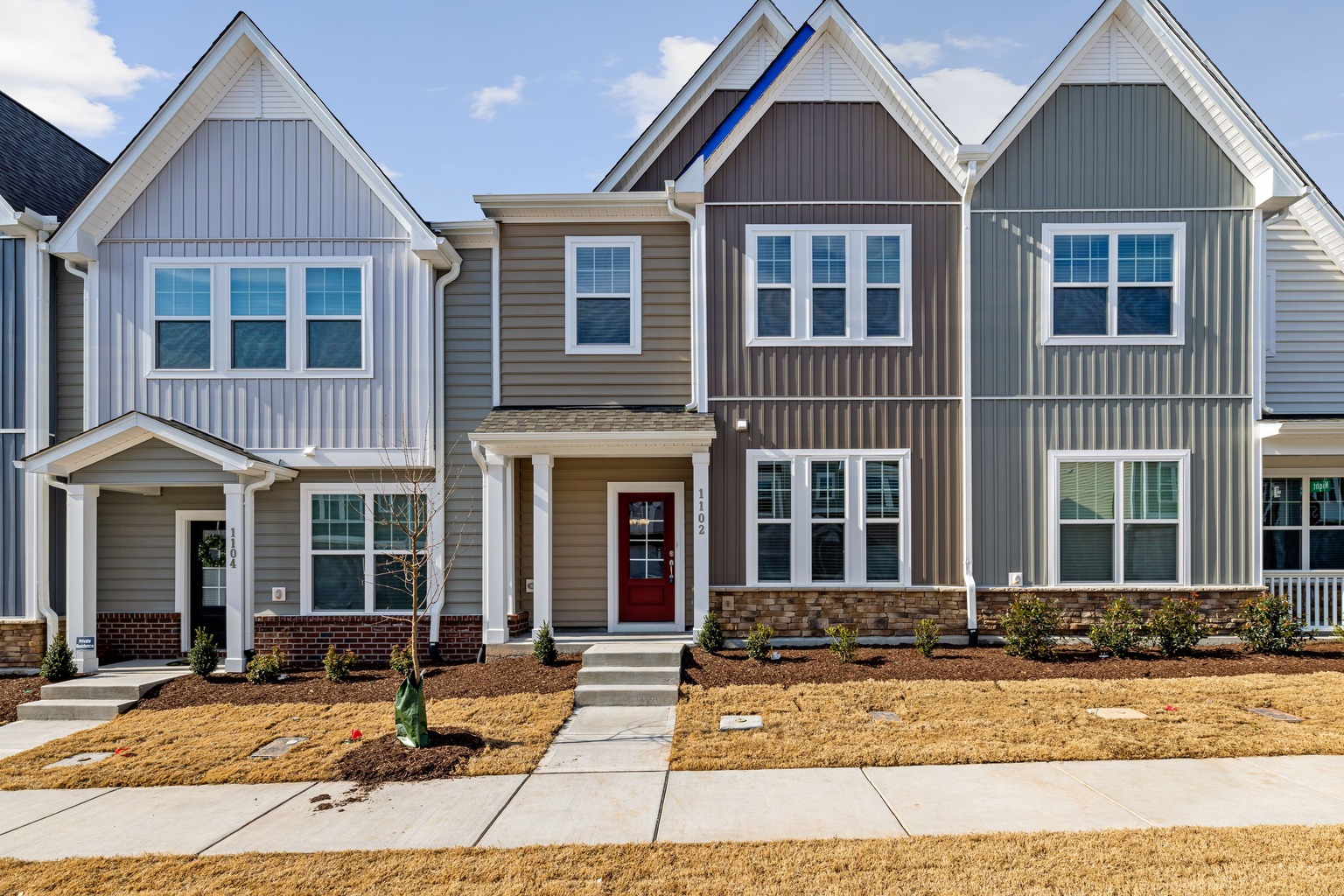
Wildfire due diligence for a Penticton townhome is not a search for a simple “safe” or “unsafe” label. It is a property-specific review of insurance availability, the strata corporation’s coverage and planning, the building and landscaping, access and evacuation readiness, and the buyer’s own tolerance for disruption and cost.
Penticton buyers should separate three questions that often get blended together: Can the home be insured on acceptable terms? Has the strata taken reasonable steps to reduce vulnerabilities it controls? Can the household act quickly if an alert or order affects the area? None of those questions can be answered from a view, a listing description or one map alone. This guide shows how to assemble evidence before removing subjects. It is general information, not insurance, legal, engineering, fire-safety or lending advice.
1. Define the risk before judging the address
Start with the exact civic address, strata plan, building location and surrounding conditions. “Near the hills” is not a technical risk assessment. Look at the immediate site, nearby vegetation, slope, road access, neighbouring properties and the distance between combustible material and structures. Then compare those observations with official local emergency information and a qualified FireSmart or insurance assessment.
The Province recommends understanding the hazards that may occur in the area and discussing them with an insurance representative. It also distinguishes wildfire from other hazards: fire, including wildfire, is generally part of B.C. home insurance, while earthquake and overland-water coverage are usually optional and policy-specific.[1] A wildfire review should not cause a buyer to overlook flood, smoke, wind, water or other property risks.
Ask what evidence supports every conclusion. A recent FireSmart assessment, strata landscaping plan, insurance renewal, meeting minutes and maintenance invoices are stronger than “the complex has never had a problem.” Past experience does not establish future insurability or eliminate changing vegetation, weather, premiums, deductibles or insurer rules.
What this means for you
Do not make the offer conditional on a vague feeling that the area looks acceptable. Make time to obtain an insurable-property response, review the strata’s evidence and understand the evacuation plan before subject removal.
2. Confirm insurance early—before an active threat
Insurance should be investigated as soon as a serious property is identified. PreparedBC says insurers may temporarily restrict new policies or coverage changes in areas under imminent threat during major wildfires.[1] Insurance Bureau of Canada similarly notes that restrictions can affect new policies, deductible changes, insured limits or major policy changes and may ease after the threat declines.[4] A buyer who waits until the final hour of subject removal may discover that timing—not only the building—has become a problem.
Give the broker the full property details and the strata corporation’s current insurance summary or policy, not only the MLS® sheet. Ask for written confirmation of whether coverage is available, the quoted premium, deductibles, limits, exclusions, replacement-cost basis, additional living expense limits and any wildfire-related conditions. Ask how long the quotation is valid and whether a new inspection or underwriting review is required before completion.
Do not treat a verbal “should be fine” as a binder. The insurer applies its own underwriting criteria. The lender may also require proof of suitable coverage and may have requirements related to the strata corporation’s policy. Keep the financing and insurance subjects coordinated so one is not removed while the other remains unresolved.
3. Review the strata policy and the buyer’s unit policy together
A conventional strata townhome usually involves at least two insurance layers: the strata corporation’s policy for the property it must insure, and the owner’s policy for personal exposures. The Province states that strata insurance does not cover an owner’s personal liability, household contents, additional living expenses or payment of the strata corporation’s deductible; owner coverage can address those and other gaps, subject to its terms.[5]
Request the current Form B and attached insurance summary, the full policy or certificate if available, the most recent AGM insurance report, notices of material changes, and minutes discussing renewals, claims, deductibles or coverage difficulty. Check the policy period against the completion date. If renewal occurs before completion, ask what is known about the renewal process and whether council has budgeted for a premium change.
With the broker, compare the strata deductible with the unit policy’s deductible-assessment coverage. Review contents, improvements or betterments, loss assessment, liability and additional living expenses. For a bare-land strata, responsibilities can be different: the Province notes that the owner is generally responsible for insuring, repairing and maintaining buildings on the strata lot, and advises considering a bare-land endorsement.[5] Confirm the registered strata plan and policy structure rather than assuming all townhomes are insured the same way.
4. Read the strata record for planning, not promises
Search council, AGM and special-general-meeting minutes for wildfire, FireSmart, vegetation, roof or gutter cleaning, fencing, decks, exterior materials, irrigation, water supply, emergency planning, insurance and claims. Review the operating budget and contingency reserve fund for recurring landscape maintenance and larger mitigation projects. Compare any proposal with the depreciation report and completed-work invoices.
Useful questions include: Has the property had a professional FireSmart or Home Ignition Zone assessment? Which recommendations were completed? Who maintains limited common property, private yards, roofs, gutters and vegetation? Are there bylaws restricting owner changes? Has the council discussed combustible fencing, cedar hedges, bark mulch, stored materials or vegetation against buildings? Is there a collective emergency plan and a current resident contact process?
Minutes can reveal discussion, but discussion is not completion. If council approved pruning, gravel replacement or a debris-removal project, ask for the completion date and scope. If the work was deferred, understand why and whether funding was approved. If the strata has no formal assessment, that absence is not proof of high risk; it is an information gap to evaluate with qualified help.
5. Inspect landscaping through the Home Ignition Zone
FireSmart BC places special emphasis on the area closest to a structure. Its landscaping guidance calls for a 1.5-metre non-combustible zone around the home and attachments such as decks, and says changes within 10 metres can have significant impact.[3] For attached townhomes, those zones can overlap several strata lots and common areas, making coordinated maintenance important.
0–1.5 metres
Look for combustible mulch, woody shrubs, stored materials, dry debris, planters, patio items and vegetation touching siding or decks. Note whether gravel, stone or another non-combustible surface is maintained.
1.5–10 metres
Look at spacing, plant health, dead material, low branches, hedges, fences and paths that could connect vegetation to a building. Ask who is responsible for ongoing pruning and cleanup.
10–30 metres
Where the strata controls this area, consider dense vegetation, deadfall, slope and continuity between fuels. Where it does not, identify adjacent ownership and avoid assuming the strata can alter it.
Building details
Observe roofs, gutters, vents, soffits, siding, decks and spaces under decks. Record concerns for an inspector or FireSmart professional rather than diagnosing them yourself.
FireSmart BC warns that cedars and junipers can be highly flammable, that bark and other plant-based mulches should not be used next to buildings, and that roofs and gutters should be kept clear of branches and leaves.[3] These are screening points, not a guarantee that a home will survive a wildfire. Plant condition, location, maintenance, construction and the broader fire environment all matter.
6. Confirm who can approve and perform changes
A buyer may notice an easy-looking improvement—remove a hedge, replace mulch, screen a vent or change a fence—but a strata owner may not have authority to do it. The feature may be common property, limited common property, part of the building envelope or controlled by a bylaw. Obtain written strata approval before relying on a future alteration.
Ask whether FireSmart work is handled as a corporation-wide project or left to individual owners. A consistent plan is especially important where one unit’s hedge, fence or stored material sits within another unit’s ignition zone. Review alteration agreements and maintenance obligations for patios, decks and yards. Budget for professional work where height, electrical equipment, roofs, trees or building-envelope details make do-it-yourself work unsafe or inappropriate.
The City of Penticton offers free wildfire mitigation assessments and says its Local FireSmart Collective Program is suitable for stratas and townhouse complexes.[6] Program details and funding can change, so verify current eligibility directly rather than pricing a purchase on an assumed rebate.
7. Build an evacuation plan that works for a townhome complex
PreparedBC recommends an emergency plan, grab-and-go bags and advance registration for Emergency Support Services. It notes that an Evacuation Alert means prepare to leave on short notice, while an Evacuation Order means leave immediately and follow official routes and instructions.[2]
For the property, identify more than one practical route if available, where vehicles are parked, how a garage can be opened during a power outage, and whether narrow internal roads or visitor parking could obstruct movement. Ask how the strata communicates with residents and whether it maintains current contacts for owners, tenants and property management. Households should plan for children, older adults, disabilities, medications, mobility devices and pets.
Save official notification sources before an emergency. The City of Penticton promotes Voyent Alert! for local emergency notifications and directs residents to official wildfire information sources.[6] Do not depend on neighbourhood rumours or a social-media screenshot. Keep insurance contacts, identification copies, medications, chargers, keys and essential documents ready in a portable plan.
8. Use the showing and inspection to collect evidence
At the showing, photograph only what you are permitted to document and note the relationship between the unit, attached homes and common landscaping. Look for dry debris in corners, combustible storage under decks, leaves in visible gutters, vegetation touching structures, wooden fences that connect to buildings, and the condition of irrigation and access lanes. These are prompts for follow-up, not conclusions about code compliance or insurability.
Ask the home inspector about observable building vulnerabilities and the limits of the inspection. A general home inspection is not automatically a wildfire-risk assessment. Where the setting or evidence warrants it, use a qualified FireSmart professional, arborist, building-envelope specialist, electrician or other expert. Confirm which recommendations are advisory and which require permits or strata approval.
Reconcile the physical visit with the documents. Fresh gravel beside one unit does not prove the full complex has a coordinated plan. An assessment from several years ago does not prove recommendations remain complete. Conversely, a dry Okanagan landscape is not itself proof that the property is uninsurable. The decision should rest on current, property-specific evidence.
9. Write the offer around the work that must be completed
Allow enough time for the insurer and lender to review the exact property, for the strata package to arrive, and for follow-up questions or professional assessments. A useful insurance condition should address obtaining coverage acceptable to the buyer, but contract wording must be prepared for the actual transaction. A strata-document condition should leave time to review insurance, minutes, bylaws, budgets, reports and proposed mitigation work.
If wildfire activity is affecting underwriting when the offer is written, discuss the timing problem before committing. Do not assume a later extension will be granted. Ask the broker what can be confirmed now, what remains contingent, and what evidence the lender requires. If the policy renewal is imminent, identify the uncertainty rather than representing the present premium as a future guarantee.
Before subject removal, assemble one decision page: insurance availability and cost; strata policy and deductible; owner-policy gaps; completed and planned mitigation; alteration limits; evacuation communications; inspection findings; lender approval; and unresolved items. Then decide whether the remaining risk is acceptable, needs an amendment or warrants ending the transaction under the contract’s actual terms.
Verify insurance and strata evidence early, then match subjects and deadlines to the work still required.
Organize the current policy, assessments, approvals and completed-work records so buyers can evaluate the property accurately.
Keep gutters, vegetation and stored materials maintained, and raise complex-wide planning through the strata council.
10. A practical wildfire due-diligence checklist
- Identify the exact property: confirm address, strata type, plan, lot boundaries and who owns or maintains nearby land.
- Call an insurance broker early: provide the listing and current strata insurance material; obtain property-specific terms in writing.
- Compare both policy layers: strata coverage, unit coverage, deductibles, additional living expenses, betterments and loss assessment.
- Read the record: minutes, AGM materials, Form B, insurance notices, depreciation report, budgets and completed-work evidence.
- Walk the ignition zones: building edge, landscaping, fences, decks, stored materials, gutters, vegetation continuity and access.
- Confirm authority: determine which changes need strata approval and who must maintain each area.
- Test evacuation readiness: official alerts, household plan, pets, mobility needs, vehicles, garage access and grab-and-go bags.
- Coordinate subjects: insurance, financing, inspection, strata review and specialist advice should reach a decision before the deadlines.
- Document open questions: do not convert missing information into a reassuring assumption.
- Recheck before completion: confirm coverage remains in force and review any material strata-insurance change or active emergency condition.
FAQ: wildfire checks for Penticton townhome buyers
PreparedBC says fire, including wildfire, is generally a standard component of B.C. home insurance, but limits, deductibles, exclusions and underwriting are policy-specific. Obtain property-specific written advice from an insurance representative.
Yes. Insurers may temporarily restrict new policies or major coverage changes in areas under imminent threat. Start the insurance review early and ask how long a quotation or approval remains valid.
Not generally. The Province says strata insurance does not cover an owner’s contents, personal liability or additional living expenses. Review a separate unit-owner policy with the strata insurance material.
Only if you have authority to do so. Landscaping may be common or limited common property and changes may require written strata approval. Confirm ownership, bylaws and alteration rules before relying on a future change.
No. It identifies risk-reduction opportunities; it does not eliminate wildfire risk or guarantee insurance, lending or survival in a specific event.
Sources
- Province of BC — Insurance and emergency preparedness
- Province of BC — Getting ready before a wildfire
- FireSmart BC — Landscaping best practices
- Insurance Bureau of Canada — Severe weather insurance help
- Province of BC — Strata owner and tenant insurance
- City of Penticton — Penticton FireSmart
- Pexels — Representative townhome photograph by Curtis Adams
Want to keep going?
Get the South Okanagan Townhome Buyer’s Guide (Free)
Instant download link is emailed to you. Clear checklists, strata fee basics, and the questions buyers forget to ask.
No spam. Unsubscribe anytime.