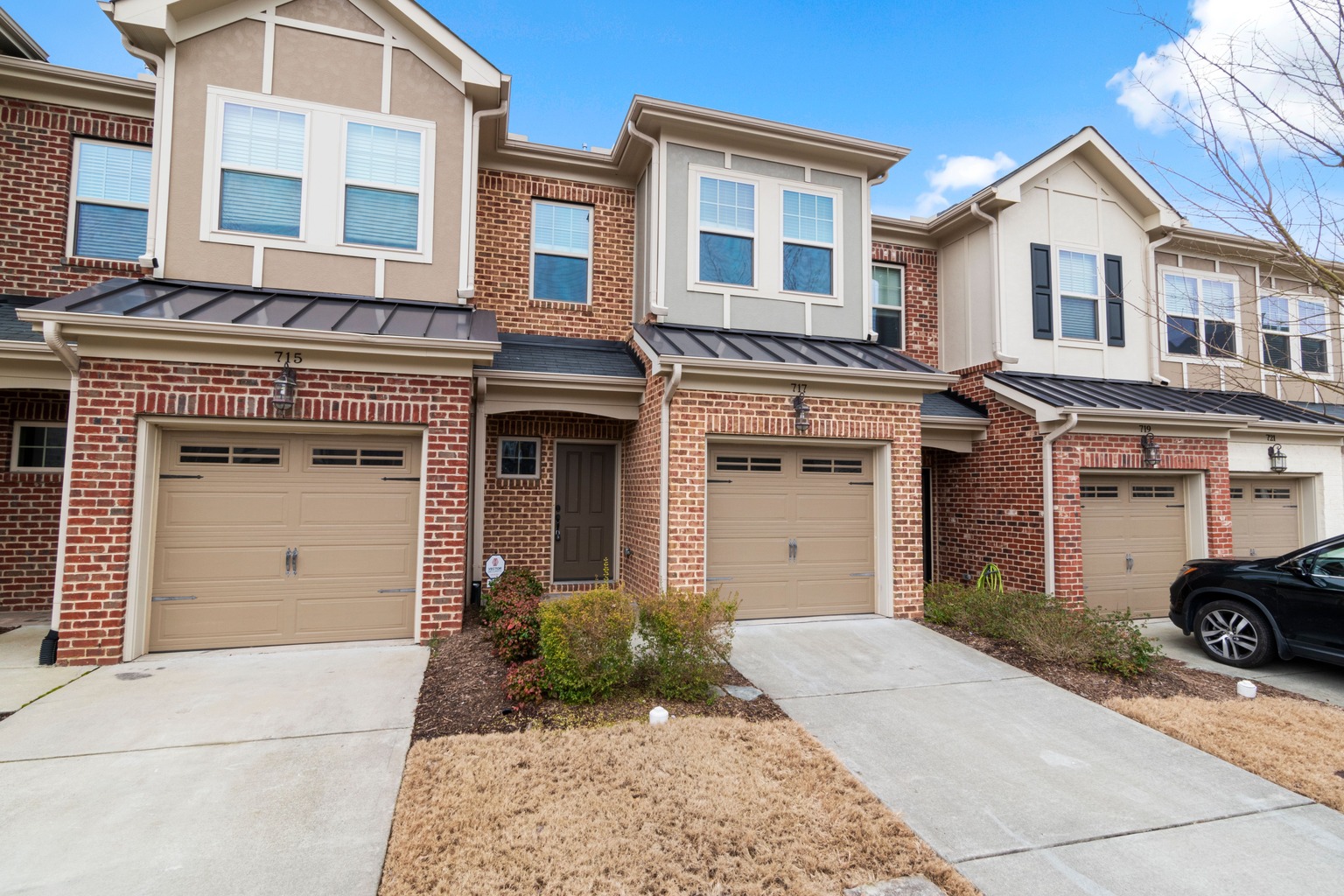
A small or self-managed strata can be a perfectly workable way to own a Penticton townhome. Fewer homes may mean simpler common property, direct communication and lower management overhead. It can also mean that a handful of neighbours must handle budgets, records, insurance, maintenance, meetings and legal duties that a professional manager would otherwise help administer.
The buyer’s task is not to decide that “self-managed” is automatically good or bad. It is to test whether the owners have built a reliable operating system. A polished binder is helpful, but consistent decisions, current records, adequate insurance, transparent banking and realistic maintenance planning matter more. This guide provides general information, not legal, accounting, engineering, insurance, lending, appraisal or tax advice.
1. What “small” and “self-managed” actually mean
“Small strata” usually describes a corporation with relatively few strata lots; it is not a separate ownership form. “Self-managed” means the owners and council perform administration without a licensed strata-management brokerage. BCFSA confirms that strata corporations may self-manage and that owners can undertake that work without becoming licensed strata managers.[1]
That choice does not remove the strata corporation’s obligations. The corporation still functions through council, must hold required meetings or validly waive them, approve budgets, keep records, maintain common property, collect contributions, obtain insurance and follow the Strata Property Act, regulations and registered bylaws. The Act says the council exercises the powers and performs the duties of the strata corporation, subject to the Act, regulations and bylaws.[7]
In practical terms, management style and legal responsibility are separate questions. A two-, four- or eight-home development can be informally friendly while still needing formal decisions and reliable documents. Conversely, the absence of a management company is not itself evidence of weak governance. Look for repeatable processes rather than a label.
What this means for you
Do not reject a small strata because it is self-managed. Confirm who does each job, how decisions and money are controlled, and whether the records show that the system keeps working when one volunteer steps away.
2. Test the governance, not the personalities
In a small community, one capable treasurer or long-serving president may hold much of the operational knowledge. That can make the strata feel efficient, but it also creates concentration risk. Ask who can access the bank accounts, insurance files, contracts, owner list, passwords, minute book and emergency contacts. Then ask what happens if that person sells, becomes ill or resigns.
Review AGM, SGM and council minutes for evidence of decisions rather than casual updates. Budgets should be approved; council members should be identified; major contracts and expenditures should be authorized; conflicts should be disclosed; and vote results should be recorded. CHOA’s 2026 guidance for small strata corporations emphasizes that even minimal documentation is critical for lawful operation and future Form B disclosure.[8]
Continuity
At least two people know where records, accounts, policies, keys and vendor contacts are kept.
Authority
Minutes show who approved budgets, repairs, contracts, payments and insurance renewals.
Conflicts
Related-party work or owner reimbursements are disclosed, documented and independently reviewed.
Participation
Meeting history shows that owners receive notices, attend, vote and address unfinished business.
A warm conversation with council can add context, but it is not a substitute for the registered bylaws or written records. If council says “we all agree” or “we have always done it this way,” ask where the agreement appears in minutes, resolutions, contracts or bylaws. Informal harmony today does not bind a future owner.
3. Treat missing records as a risk to investigate
B.C. strata corporations must prepare and retain specified records. The Province lists minutes, books of account, budgets, financial statements, bank statements, insurance contracts, bylaws, rules, depreciation reports and major repair reports among the required records, with different retention periods.[3] The council is responsible for record keeping even when the work is delegated.[3]
For a buyer, gaps matter for two reasons. First, you may be unable to confirm whether maintenance, alterations or spending were properly approved. Second, weak records can make insurance renewal, lender review, resale disclosure and contractor warranty claims more difficult. Missing minutes do not prove a hidden problem, but they remove evidence that could have ruled one out.
Ask for a complete, current package rather than accepting a few recent PDFs. Compare the meeting dates in the minute index with the documents delivered. Check whether financial statements reconcile with budgets and whether approved projects appear in invoices, bank activity and later minutes. For owner-completed work, look for alteration approvals, responsibility agreements, permits where applicable and warranty information.
4. Read the current Form B as a snapshot—not the whole story
The Province describes Form B as an information certificate about both the strata lot and the strata corporation. It can disclose monthly fees, owner debts, alteration agreements, approved special levies, projected budget overruns, the contingency reserve balance after approved expenditures, unfiled bylaw changes, litigation, work orders, parking, storage and an insurance summary.[2]
The current budget, rules, most recent depreciation report if any, and electrical planning reports must be attached, along with certain resolutions or legal details when applicable.[2] Read the date carefully. Events after that date—an insurance renewal, emergency repair, new claim, SGM or approved expenditure—may change the picture.
In a self-managed strata, confirm who prepared and signed the Form B and how the figures were verified. Compare the CRF balance with the latest bank statement and financial report. Compare declared special levies and work orders with the minutes. If the package is inconsistent, request clarification in writing before relying on it.
5. Look beyond low strata fees
Low fees can reflect simple common property and volunteer administration. They can also reflect postponed work, incomplete budgeting or a reliance on future special levies. Build a basic three-column review: annual operating needs, long-term capital needs and cash already available. Then ask whether the funding plan matches the physical property.
The Province recommends accounts in the legal name of the strata corporation, separate accounts for operating, contingency reserve and special-levy funds, transparent access to financial records, monthly bank-statement review, at least two people approving expenses, and independent checking of the work performed.[6] These controls are especially important when volunteers collect fees, authorize invoices and prepare reports.
- Operating budget: Does it include insurance, utilities, landscaping, snow removal, repairs, professional advice, banking and recurring service contracts?
- Arrears: Are all owners current, and is there a documented collection process?
- Reserve funding: Are contributions regular and tied to known future work?
- Special levies: Were past levies collected and spent for their approved purpose?
- Controls: Who receives funds, who approves invoices, who signs, and who reviews statements?
- Forecast: What happens to each owner’s share if a roof, retaining wall, private road or major utility needs work?
Do not judge the CRF balance in isolation. A modest balance may be reasonable for a young, simple property with a credible funding plan. A larger balance can still be inadequate for imminent major work. Match cash, timing and owner responsibility to the actual component inventory.
6. Understand the depreciation-report threshold
B.C. strata corporations with five or more lots must obtain depreciation reports on a five-year cycle. Corporations with four or fewer lots remain exempt from that requirement.[4] For stratas in areas of B.C. outside Metro Vancouver, the Fraser Valley and the Capital Regional District—including Penticton—the transition deadline for an older or missing report is July 1, 2027.[4]
An exemption is not a finding that a roof, roadway, drainage system or building envelope needs no planning. If a two-, three- or four-lot strata has no formal report, ask what inspection, quote or owner-approved schedule replaces it. Identify the common assets, estimate remaining life, review completed work and model each owner’s share of major projects.
For a strata that must have a report, check its date, provider qualifications, inspected components, 30-year cost forecast and funding models. The Province says a depreciation report inventories common assets and projects maintenance, repair and replacement costs over 30 years; it also requires at least three CRF cash-flow funding models.[4] The report is a planning tool, not proof that owners adopted or funded its recommendations.
7. Verify corporate and owner insurance separately
Every B.C. strata corporation, regardless of type or size, must obtain the property and liability insurance required by the Act. The Province specifically includes strata-titled duplexes and bare-land developments in that rule.[5] Individual homeowner insurance does not replace the corporation’s policy.
Request the current policy or cover note, insurance summary, replacement-cost appraisal, deductibles, exclusions, claims history and renewal date. Confirm that the insured property matches the registered strata plan and responsibility structure. This is important in small detached-townhome or bare-land arrangements, where owners may misunderstand whether buildings, roads, utilities or other components belong under the corporation’s policy.
Send the exact package to an insurance broker before removing subjects. Ask for written confirmation of owner-policy availability, coverage for improvements and contents, additional living expense, liability, deductible assessment exposure, water damage and any property-specific conditions. If owners perform maintenance or snow work themselves, ask what contractor, volunteer, WorkSafeBC or liability issues need attention.
8. Trace maintenance from problem to completion
Small stratas often know their property intimately, but knowledge should leave a record. Pick several visible components—the roof, exterior cladding, drainage, retaining walls, paving, irrigation, fencing or shared mechanical systems—and trace each one through inspections, discussion, approval, invoice and completion. The sequence shows whether the strata converts concerns into action.
Ask about emergency authority and vendor access. Who can shut off water? Who calls the insurer? Who has keys, account numbers and contractor contacts? Is there a written process for a leak, wildfire evacuation, frozen pipe, sewer backup or prolonged power outage? Penticton’s seasonal heat, winter conditions and sloped sites can make delayed response expensive even in a very small development.
Also identify what the strata does not maintain. Read the strata plan, bylaws and any owner agreements to distinguish strata lots, common property and limited common property. Do not rely on the visual appearance of a private yard, driveway, exterior wall or roof section to decide who pays.
9. Build enough time into the offer
A useful due-diligence condition should allow time to obtain a current Form B, complete records, insurance confirmation, lender review, a professional inspection and any legal or accounting advice the buyer needs. A self-managed council may require more time to assemble records than a management company with an online portal. Set the deadline from the work required, not from optimism.
When questions arise, make them specific. Ask for the bank statement supporting the reported reserve balance, the resolution approving a project, the current insurance endorsement, the roof invoice, or the alteration agreement for the unit. Written answers are easier to evaluate and preserve than a hallway conversation.
Test the operating system: authority, records, money controls, maintenance planning and insurance.
Order a current Form B early and help council assemble complete, internally consistent records.
Reduce dependence on one volunteer by documenting access, approvals, vendors and annual tasks.
10. Small-strata buyer checklist
- Confirm the registered strata plan, lot count, unit entitlements, bylaws and rules.
- Identify whether the strata is self-managed, professionally managed or uses limited outside services.
- Review two years of council, AGM and SGM minutes, plus older records for major issues.
- Obtain a current Form B with all required attachments and compare it with later events.
- Reconcile the budget, financial statements, CRF balance, bank statements and approved spending.
- Confirm who receives money, approves invoices, signs payments and independently reviews accounts.
- Review arrears, special levies, contracts, claims, litigation, work orders and alteration agreements.
- Check the depreciation report, or the replacement planning used by an exempt four-or-fewer-lot strata.
- Verify the corporation’s insurance and obtain written owner-policy confirmation for the exact home.
- Trace important maintenance items from inspection through approval, invoice and completion.
- Ask how records, passwords, emergency information and duties transfer when volunteers change.
- Keep conditions in place until the buyer’s professional reviews and written answers are complete.
FAQ: small and self-managed Penticton stratas
Yes. Owners may self-manage without a licensed strata manager, but the strata corporation and council still have to meet their legal, financial, record-keeping, maintenance and insurance duties.
Strata corporations with four or fewer lots are exempt from the provincial depreciation-report requirement. Buyers should still look for credible inspection, replacement and funding plans for common assets.
They can be when common property is simple and the budget is complete. They are a warning when maintenance, insurance, reserves or professional services are missing from the plan.
Dependence on one volunteer who controls records, banking, passwords or vendor knowledge. Strong small stratas document duties and provide independent access and review.
Not necessarily. Corporate and owner insurance serve different needs. Give the current strata policy and property details to a knowledgeable broker and obtain written advice for your coverage.
Sources
- BCFSA — FAQs about Real Estate Transactions
- Province of British Columbia — Form B: Information Certificate
- Province of British Columbia — Information and record keeping in stratas
- Province of British Columbia — Strata depreciation report requirements
- Province of British Columbia — Insurance for strata corporations
- Province of British Columbia — Financial best practices for stratas
- BC Laws — Strata Property Act
- CHOA — Small Strata Corporations
- Pexels — Representative townhouse photograph by Curtis Adams
Want to keep going?
Get the South Okanagan Townhome Buyer’s Guide (Free)
Instant download link is emailed to you. Clear checklists, strata fee basics, and the questions buyers forget to ask.
No spam. Unsubscribe anytime.