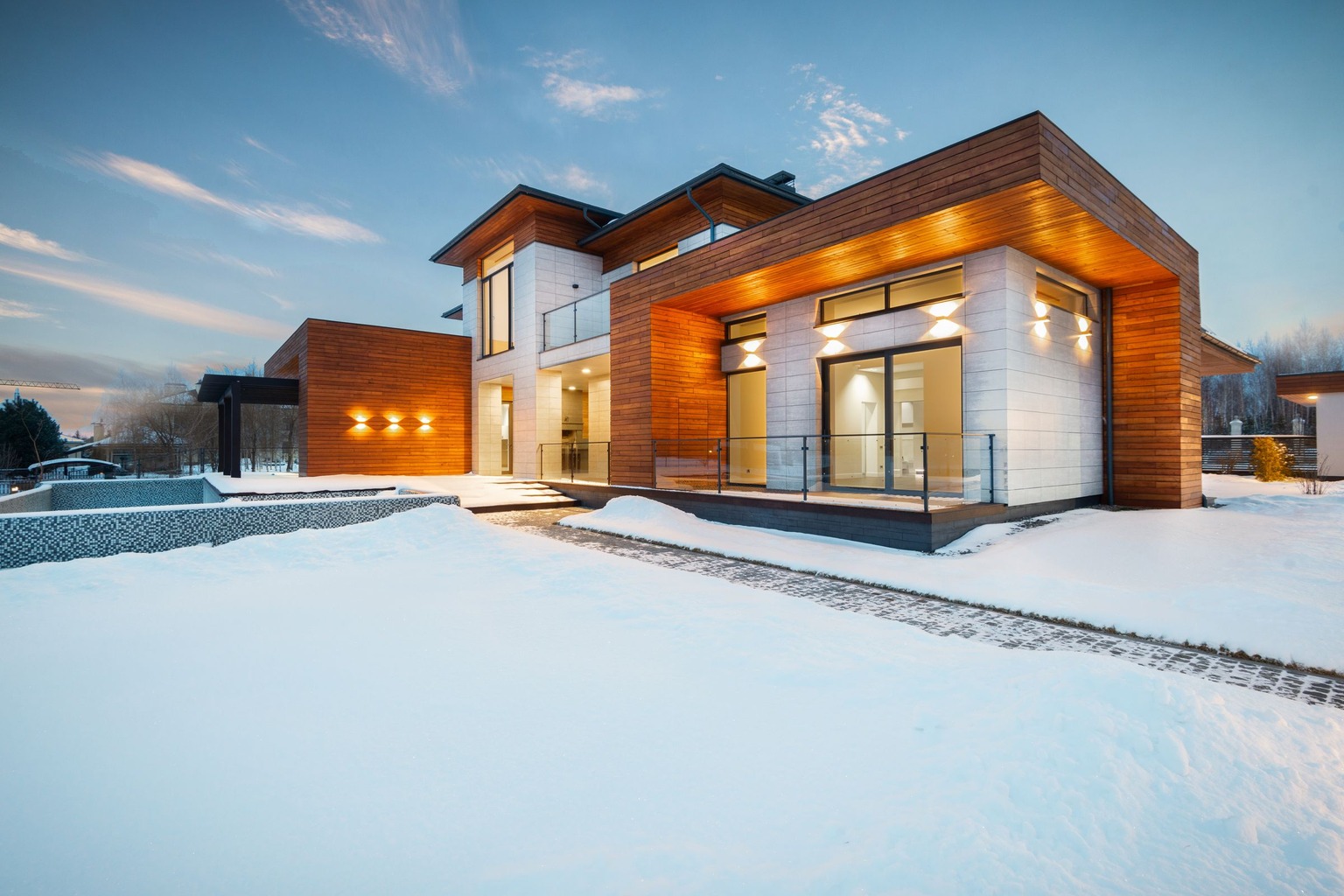
Winter can be one of the most useful times to view a Penticton townhome. Cold weather reveals how the heating system feels, where drafts enter, how snow and meltwater move through the property, whether parking works after a storm and how clearly the strata has assigned seasonal maintenance.
The goal is not to avoid every home with snow, an older furnace or an exposed walkway. It is to understand the system you are buying into. A townhome combines the condition of the strata lot with shared roofs, roads, landscaping, drainage, utilities, insurance and service contracts. The best winter due diligence connects what you see at the showing with the strata plan, bylaws, budget, minutes, depreciation report, insurance summary and professional inspections. This guide is general information, not legal, engineering, inspection, lending, appraisal, insurance, tax or accounting advice.
1. Use the winter showing as a real-world test
Arrive early enough to inspect the approach, visitor parking and pedestrian route in daylight. Notice which roads and drive aisles have been cleared, where snow has been piled, whether catch basins remain open and whether packed snow narrows turns or blocks sightlines. The City of Penticton clears roads by priority and asks residents to make room for plows, clear catch basins and keep carts away from snowbanks.[5] A strata road or lane may have a different contractor and service standard, so do not assume the municipal program covers everything inside the development.
Walk every route you would use: garage to street, front door to garbage area, visitor stall to entry and home to mailbox. Look for refrozen meltwater, steep transitions, shadowed stairs, downspouts discharging onto walking surfaces and snow piled against cladding or mechanical equipment. If the home has a private yard or patio, check whether winter access is practical and whether stored snow could damage fencing, landscaping or drains.
Inside, resist the temptation to judge comfort only by the thermostat display. Stand near exterior doors, windows, the garage wall, stairwells and rooms above unheated space. Uneven temperature can come from normal sun exposure or closed registers, but it can also point to air leakage, insulation gaps, balancing problems or equipment that needs attention. Ask how long the heating system had been running before the showing.
What this means for you
Winter lets you test conditions that a summer showing can hide. Record what you observe, then match every concern to the responsible party, the relevant document and the right professional before removing subjects.
2. Map who handles snow, ice and exterior winter work
British Columbia guidance says the strata corporation must repair and maintain common property and common assets, while owners also have responsibilities for their strata lots and sometimes limited common property.[1] The Province specifically identifies roads, landscaping, utilities and building envelopes among the assets a strata corporation may need to maintain, and recommends clearly assigned, coordinated and documented maintenance roles.[2]
That broad framework does not answer every property-specific question. Read the registered strata plan, bylaws and current rules. Determine whether the driveway is common property, limited common property or part of the strata lot. Do the same for front steps, patios, balconies, gutters, hose bibs, exterior taps, heat pumps, vents and outdoor drains. A service contract may cover a common driveway but exclude the short path to each door.
Ask about timing
What snowfall depth triggers service? Are steep areas, stairs and accessible routes treated first? Is there an after-hours contact?
Ask about scope
Roads, visitor stalls, sidewalks, stairs, private driveways, hydrants, garbage areas and roof edges may not share one contract.
Ask about materials
Confirm where salt, sand or other de-icers are used and whether owners have restrictions near concrete, plants or pets.
Ask about storage
Find the designated snow-pile areas and whether they interfere with parking, drainage, sightlines or spring landscaping.
Read recent winter minutes for contractor complaints, slip incidents, drainage issues, roof leaks, ice dams, snow-load discussions and budget overruns. One complaint does not prove chronic failure. Repeated concerns without a documented response deserve a current explanation. Ask for the active contract or a written summary of the service standard when snow management is important to your mobility or daily routine.
3. Identify the heating system and its true operating pattern
Townhomes in Penticton may use electric baseboards, forced-air furnaces, heat pumps, gas fireplaces, radiant systems or a combination. Record the make, model, fuel, approximate age and service history of each system. Confirm which equipment is included in the sale and whether any component sits on common property or serves more than one strata lot.
Ask for at least twelve months of available utility history, but interpret it carefully. Bills reflect the prior household’s occupancy, thermostat habits, vacant periods, weather and rate plan. They are not a guarantee of your future costs. Compare similar months rather than a winter bill with a shoulder-season bill, and note whether the home was occupied full-time.
Test each thermostat and visible heat source within the limits of the inspection and seller’s instructions. Listen for unusual cycling or noise. Check whether bedrooms, bathrooms and the room above the garage reach a comfortable temperature. Look for blocked baseboards, damaged registers, soot, corrosion, condensate staining or portable heaters that may be compensating for a weak area. A qualified inspector or licensed contractor should evaluate concerns; a showing is not a mechanical inspection.
If the townhome uses a heat pump, ask about cold-weather performance, backup heat, outdoor-unit drainage and snow-clearance requirements. If it has a gas fireplace, determine whether it is supplemental or relied upon for a large part of the home. For a forced-air system, review filter access, maintenance records and whether duct distribution seems balanced.
4. Trace the frozen-pipe risk before it becomes a claim
BC Hydro notes that insulating accessible exposed water pipes can reduce heat loss and the risk of freezing, and advises keeping the home at a sufficient temperature in cold conditions.[3] FortisBC advises maintaining at least 17 °C while away in winter to help keep pipes and appliances from freezing and to reduce moisture buildup.[6] Those general recommendations do not replace the instructions for the exact building, equipment or insurance policy.
Locate water lines near exterior walls, garages, crawlspaces, utility rooms and hose bibs. Ask whether exterior taps are frost-free, whether shutoffs are accessible and who winterizes irrigation or shared plumbing. In an attached townhome, a leak may affect more than one home, so response time and access procedures matter.
Search minutes and insurance history for frozen lines, water escapes, repeated leaks or emergency shutoffs. Ask what was repaired, whether insulation or routing changed and whether the incident led to a deductible chargeback. A past leak is not automatically a reason to reject the property; an unresolved pattern or incomplete documentation is the bigger concern.
If you travel in winter, review the bylaws and proposed owner’s policy for vacancy, monitoring and heat-maintenance requirements. Decide who can enter the home, where the main shutoff is, how low-temperature alerts will be received and what happens during an extended outage. Put the plan in writing before possession.
5. Follow snow and water from roof to drain
Snow eventually becomes water. Examine roof edges, gutters, downspouts, scuppers, drains, patios, grading and catch basins. Look for staining, displaced downspouts, damaged gutters, icicles, ponding, salt deposits and patched areas. Ask whether roof snow removal is routine, condition-based or never normally required, and who has authority to call a contractor.
Review the depreciation report for roofs, gutters, drainage, retaining walls, road surfaces and waterproofing. Compare forecast work with the latest minutes and budget. A depreciation report is a planning tool, not proof that every listed project has been completed or that every winter issue has been identified.
For homes with balconies or rooftop areas, clarify whether owners may remove snow and what tools or de-icers are permitted. An owner trying to help can damage a membrane or direct water toward another area. Follow the strata’s written process and obtain professional advice when the source of moisture is unclear.
6. Read the strata policy and your proposed policy together
All B.C. strata corporations must carry property and liability insurance required by the Strata Property Act, but strata-corporation insurance is not the same as an owner’s policy. The Province advises owners to obtain separate coverage for their needs, including contents, liability and upgrades.[7] The strata policy covers defined common property, assets, buildings and original fixtures according to the plan and policy; your broker must explain how the exact documents apply.
Give your broker the current strata insurance summary, deductible schedule, bylaws, Form B, planned occupancy and any history that raises questions. Ask about water escape, sewer backup, overland water where relevant, additional living expenses, improvements, liability and potential responsibility for a strata deductible. Get available coverage and conditions confirmed in writing before subject removal.
Winter risk is not limited to frozen pipes. Slips, roof leaks, ice-related damage, blocked drains and an outage-related loss can involve different coverages, exclusions and responsibilities. Do not assume the presence of strata insurance means every event is covered or that you cannot be charged a deductible under the bylaws and legislation.
7. Test the power-outage plan
BC Hydro recommends an emergency kit that supports a household for at least 72 hours and a shared outage plan.[4] In a townhome, also ask which common systems depend on power: garage doors, gates, sump pumps, heat, water, hallway lighting, fire systems, elevators, access controls or communications.
Confirm how to release the garage door manually and whether every household member can do it. Ask whether emergency lighting or backup power serves any shared equipment. If a resident relies on medical equipment or accessible egress, the plan should address that need directly rather than assuming the strata will improvise during an outage.
For electric heating, consider how quickly the home loses heat. For gas appliances, confirm which controls still require electricity. Never use outdoor cooking or combustion equipment indoors. Follow manufacturer, utility and emergency-authority directions rather than inventing a backup-heating setup.
8. Build a winter document checklist
Winter due diligence works best when the physical clues and documents support each other. Start with Form B, the current budget, financial statements, bylaws, rules, depreciation report, insurance summary, AGM and SGM packages and at least the recent council minutes available for review. Add service contracts, invoices or professional reports when a material issue appears.
- Snow and ice: contractor scope, trigger depth, priority routes, complaints, incidents and seasonal budget.
- Heating: equipment age, service records, fuel, backup heat, utility history and responsibility for replacement.
- Water: frozen-pipe or leak history, shutoffs, hose-bib winterization, deductible history and response process.
- Envelope: roof, gutter, drainage, window, door and insulation projects in reports and minutes.
- Access: garage release, visitor parking, accessible paths, waste collection and outage procedures.
- Money: recurring winter costs, contract increases, reserve-funded work, approved levies and unfunded proposals.
Separate an approved expense from a discussed possibility. A contractor quote in the minutes is not always an approved special levy. Conversely, a low current budget may not be reassuring if records show deferred work. Ask for written clarification when the latest document ends before a decision.
9. Decide whether the winter profile fits your household
A well-run strata can make winter ownership easier by coordinating roads, snow, roofs, landscaping and shared infrastructure. The trade-off is that you depend on collective budgets, rules, contractors and response standards. A self-managed or bare-land strata may assign more work directly to owners. Neither model is automatically better; clarity and fit matter.
Use winter conditions to test comfort, access, drainage and maintenance, then confirm responsibility and cost in writing.
Prepare heating records, winter service details and resolved repair documentation so buyers can assess the home accurately.
Know shutoffs, monitoring requirements, service contacts and the strata’s reporting process before the next cold snap.
For a downsizer, the decisive issue may be a reliably cleared, low-slope route from parking to the door. For a seasonal owner, it may be monitoring, vacancy rules and pipe protection. For a family, it may be garage storage, safe walking routes and whether snow piles consume visitor parking. Define your non-negotiables before comparing listings.
10. Before you remove subjects
- View the home and common areas in winter conditions when possible.
- Map strata-lot, common-property and limited-common-property responsibilities.
- Read the snow-removal contract or obtain a written service summary.
- Identify, test and professionally inspect the heating system as appropriate.
- Locate exposed plumbing, hose-bib shutoffs and the main water shutoff.
- Review roof, drainage and water-event history against the depreciation report.
- Send the strata insurance summary and bylaws to your insurance broker.
- Confirm vacancy, heat-maintenance and monitoring conditions for your policy.
- Understand garage, access and essential-system operation during an outage.
- Budget for your likely utility use and both current and proposed strata costs.
FAQ: buying a Penticton townhome in winter
No. Winter can expose heating, access, drainage and snow-management conditions that are harder to assess in warm weather. The important step is connecting observations with documents and professional advice.
Not necessarily. Responsibility depends on the strata plan, bylaws, rules and service contract. Confirm the exact driveway, path and steps for the unit you are considering.
FortisBC gives general advice to maintain at least 17 °C in winter while away, but your home, equipment, strata bylaws and insurer may impose different or additional requirements. Confirm them in writing.
Coverage depends on the cause, property boundaries, policy terms, deductibles and owner obligations. Review the strata policy summary and your proposed owner’s coverage with a knowledgeable broker.
Review recent minutes, budgets, insurance information, the depreciation report and relevant snow, heating, roofing, drainage and water-loss records. Request current explanations for unresolved items.
Sources
- Province of British Columbia — Strata repairs and maintenance
- Province of British Columbia — Division of repair duties in a strata
- BC Hydro — Water pipes
- BC Hydro — Prepare your home for an outage
- City of Penticton — Snow and ice
- FortisBC — Winter thermostat guidance while away
- Province of British Columbia — Insurance for strata corporations
- Pexels — Winter house photograph by Max Vakhtbovych
Want to keep going?
Get the South Okanagan Townhome Buyer’s Guide (Free)
Instant download link is emailed to you. Clear checklists, strata fee basics, and the questions buyers forget to ask.
No spam. Unsubscribe anytime.