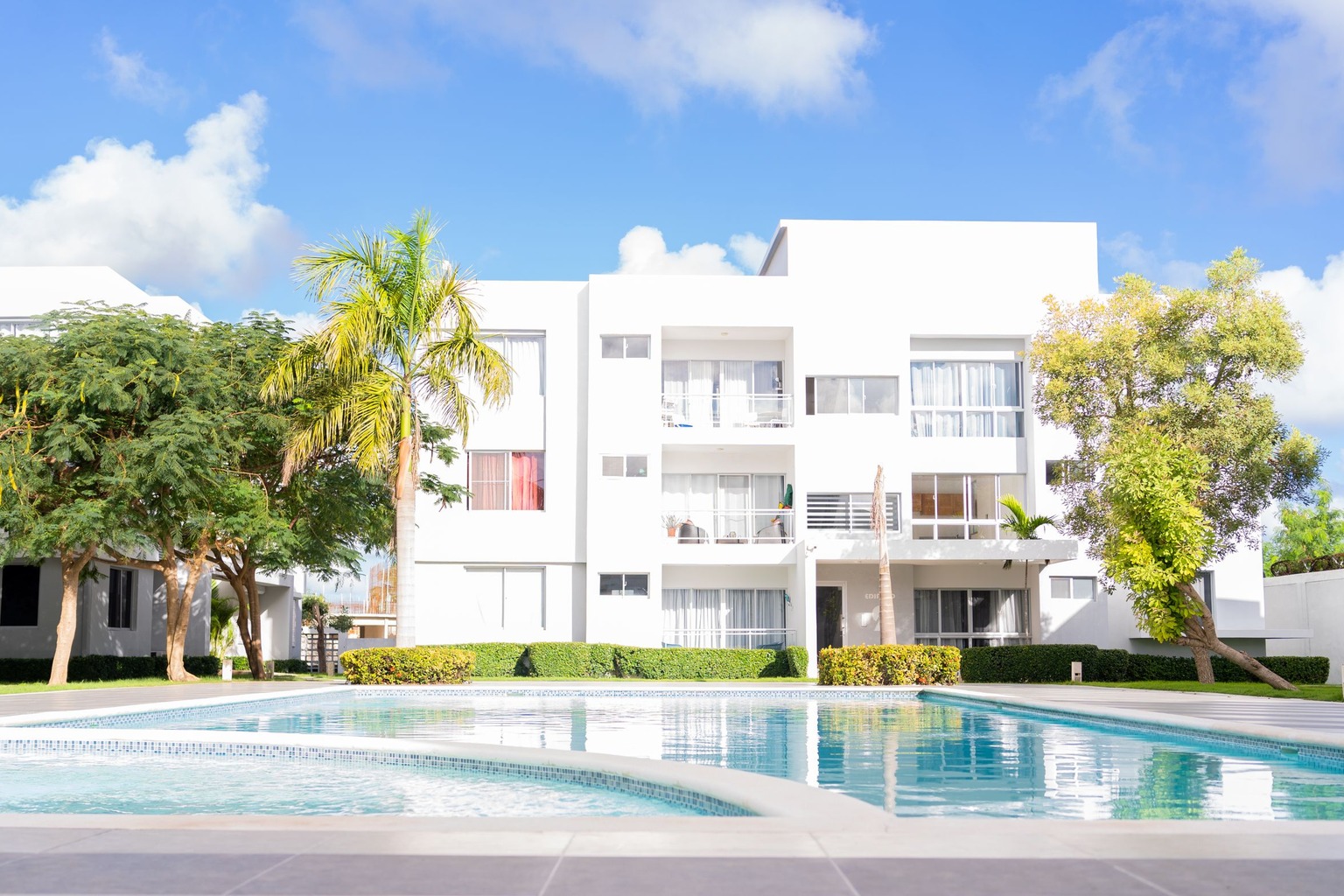
A pool, clubhouse, gym, guest suite or shared outdoor space can make a Penticton townhome feel more like a lifestyle purchase. The same amenity can also create ongoing operating costs, capital-repair exposure, booking limits, insurance questions and rules that matter long after the showing.
The practical issue is not whether an amenity looks impressive. It is whether the strata can operate, insure, maintain and eventually replace it at a cost and service level that fits your plans. A sparkling pool on viewing day tells you very little about the heating budget, mechanical condition, opening schedule, repair history or future levy risk. This guide gives buyers a repeatable review sequence for pools and other shared amenities. It is general information, not legal, engineering, lending, appraisal, insurance, tax or accounting advice.
1. Map what the amenity legally is
Start with the registered strata plan and current records. In British Columbia, recreational amenities are commonly part of the common property, which is collectively owned and controlled by the strata corporation. Owners may use common property subject to the Strata Property Act, regulations, bylaws and rules.[1] Do not assume that a patio beside a pool, a locker, a parking stall or a private-looking yard has the same legal status as the pool itself.
Ask whether each relevant area is part of a strata lot, common property, limited common property or subject to a short-term exclusive-use arrangement. That classification affects who controls access, who usually maintains it and how costs may be allocated. The Province notes that the strata plan identifies boundaries and that limited common property is common property designated for the exclusive use of one or more strata lots.[1]
For a pool or clubhouse, identify every connected component: basin, deck, fence, washroom, equipment room, pumps, heater, ventilation, roof, furniture, access system and landscaping. A listing may advertise one amenity while the financial obligation includes a much larger system. Ask your lawyer or notary to explain the plan, title and registered documents when a boundary or right is unclear.
What this means for you
Treat the amenity as an operating system, not a photograph. Confirm its legal status, physical components, decision-maker, users, rules and funding before assigning it value.
2. Separate the visible strata fee from the real amenity cost
Strata fees fund budgeted common expenses. The operating fund covers recurring costs such as utilities, cleaning, maintenance, management and annual strata insurance, while the contingency reserve fund supports less frequent expenses such as major replacements.[4] A pool can touch both funds: chemicals, testing, heating and routine servicing may be operating costs; resurfacing, pumps, liners, decks or building-envelope work may be capital items.
Do not compare two townhomes only by their monthly fee. Calculate what the fee includes and whether the current budget reflects actual amenity use. A higher fee can be understandable when it funds services you will use and the strata is planning responsibly. A low fee can be misleading if maintenance is deferred, a costly amenity is underfunded or current owners have been approving special levies instead.
Recurring
Utilities, pool heat, water, cleaning, chemicals, inspections, attendants, security, landscaping and seasonal opening or closing.
Capital
Pumps, filtration, liners, decks, roofs, elevators, HVAC, accessibility upgrades, furniture and major mechanical replacement.
User charges
Guest-suite bookings, clubhouse rentals, extra keys, parking, storage or deposits that sit outside the monthly fee.
Hidden trade-off
An amenity you rarely use still has a cost. A closed or restricted amenity may still require insurance, security and eventual repair.
The Province says a strata may impose a reasonable user fee for common-property use when the fee is set out in a bylaw or in a rule ratified at the next general meeting; clubhouse privileges are one example.[1] Request the complete fee schedule and ask whether bookings require deposits, cleaning charges or damage authorizations.
3. Read the budget beside actual spending
Obtain the current budget, latest financial statements and recent year-end results. Compare budgeted amenity lines with actual spending. Repeated overruns, unexplained transfers, emergency repairs or a budget that assumes unusually low utility costs deserve questions. The Province explains that annual budgets should itemize operating expenditures and disclose contributions to the operating and contingency reserve funds.[4]
Ask for at least two comparable years when practical. A single low-cost year may reflect a closed pool, shortened season, a warm winter, delayed work or a warranty claim. Look for changes in electricity, gas, water, maintenance contracts, insurance and staffing. If a gym or clubhouse was renovated, determine whether the cost came from the operating fund, reserve fund, special levy or borrowing.
Then connect the numbers to the amenity schedule. In Penticton, an outdoor pool that opens for a limited season provides a different benefit than a year-round indoor facility, but each can have distinct heating, winterization, ventilation and building costs. Ask what was actually available in each reviewed year rather than assuming the amenity operated normally.
4. Match the depreciation report to the amenity
For strata corporations with five or more lots, B.C. requires a depreciation report on a five-year cycle from a qualified provider. The report is intended to help owners plan and pay for common-property and common-asset repair, maintenance and renewal over 30 years.[5]
Find each amenity component in the report. Note its estimated age, remaining service life, replacement year, current cost estimate, inflation assumption and recommended funding path. If the report groups the entire pool under one line, ask whether major parts such as the heater, pumps, liner, deck and enclosure have different life cycles. If a component is missing, do not assume it is inexpensive.
Compare the recommended work with council minutes, budgets and completed invoices. A report may recommend a project in one year while the council defers it, chooses a repair or obtains new professional advice. That decision may be reasonable, but buyers need the current explanation and evidence. Record approved work, proposed work and unfunded possibilities separately.
A healthy reserve balance is not meaningful by itself. Compare available funds with the full schedule of roofs, roads, building envelopes and amenities that may compete for the same money. A well-funded pool does not remove exposure to another large project, and a large reserve does not prove every forecast is current.
5. Search the minutes for how the amenity behaves in real life
Meeting minutes reveal issues that a brochure and financial snapshot may hide. Search for closures, leaks, noise complaints, vandalism, guest misuse, accessibility concerns, water-quality incidents, booking conflicts, contractor changes, repair quotes, insurance claims and enforcement. Note whether the same concern appears repeatedly without a durable resolution.
Read the correspondence summarized in council minutes and the resolutions in AGM or SGM packages. Watch for motions to restrict hours, change age supervision, introduce user fees, approve capital work or raise a special levy. Distinguish a discussed idea from an approved decision. Ask for the most recent status when minutes end before the issue is resolved.
Form B is an important checkpoint. The Province says it discloses current strata fees, approved future special levies, reserve information, proceedings, work orders, parking and storage information and an insurance summary. Its attachments include the current budget, rules and the most recent depreciation report, if any.[2] Form B is not a substitute for reviewing minutes, contracts and professional reports.
6. Confirm the rules fit the way you will use the home
All strata corporations have bylaws and may have rules. Bylaws can govern strata lots and common areas; rules can govern the use, safety and condition of common property and common assets.[7] For amenities, the practical details can determine whether the feature is useful to your household.
- Hours and seasons: opening dates, daily hours, weather closures and quiet periods.
- Guests: limits, registration, host presence, deposits and responsibility for conduct.
- Children: supervision ages, flotation-device rules and whether there is a lifeguard.
- Bookings: advance windows, cancellation policies, cleaning expectations and event limits.
- Conduct: food, alcohol, glass, music, smoking, pets, attire and equipment storage.
- Access: key or fob rules, accessibility, stairs, door widths and washroom availability.
Read the current registered bylaws and written rules rather than relying on a seller’s memory. Ask whether temporary rules await ratification and whether any proposed amendments are in the meeting package. If your plan includes frequent guests, grandchildren, a caregiver, mobility equipment or seasonal occupancy, test that exact scenario against the documents.
7. Review strata insurance and your own coverage separately
Strata-corporation insurance is not the same as an owner’s policy. The Province states that strata corporations must obtain property and liability insurance, while owners are advised to buy separate coverage for personal contents, liability, improvements, additional living expenses and potential responsibility for a strata deductible.[6]
Ask for the current insurance summary and, when needed, the relevant policy details. Review insured values, deductibles, exclusions, water damage, equipment breakdown, liability and any claim history involving the amenity. A pool, fitness room or guest suite can create property and liability exposures that deserve a specific conversation with an insurance broker who understands strata coverage.
Provide your broker with the strata insurance summary, deductible schedule, bylaws, intended occupancy and any planned rental or seasonal vacancy. Ask whether your policy can respond to improvements, loss assessment, additional living expenses and a deductible charged back to you. Obtain written confirmation of available coverage before subject removal rather than assuming a standard condo policy is enough.
8. Inspect the amenity as carefully as the townhome
A home inspection may focus on the strata lot and visible building systems; it may not provide a technical assessment of a shared pool, elevator, gym equipment or clubhouse HVAC. Clarify the inspection scope in advance. If the amenity is financially material or records show recurring problems, consider whether specialized advice is warranted.
During the showing, observe condition without treating a visual review as proof. Look for cracking, staining, corrosion, damaged fencing, poor drainage, worn surfaces, inaccessible routes, condensation, odours, noise and out-of-service signs. Ask when the amenity was last open and whether you are seeing its normal operating condition.
Request recent invoices, service contracts, condition reports, permits or inspection records where relevant and available. Match invoices to minutes and the depreciation report. A fresh cosmetic finish can coexist with aging mechanical equipment; an older appearance can coexist with documented upgrades. Evidence matters more than presentation.
9. Decide whether the amenity earns its place in your budget
Estimate realistic use. Count how many months and how often your household would use the pool, gym, guest suite or clubhouse. Compare that benefit with the portion of monthly fees, likely future projects, booking friction and alternatives nearby. This is a household decision, not a universal rule that amenities add or subtract value.
Consider resale from the next buyer’s perspective. Some buyers prioritize pools and social spaces; others avoid them because of cost, liability or noise. The effect is property-specific and depends on condition, funding, rules, competing listings and the local market at the time. Do not convert an amenity into a fixed dollar premium without comparable evidence.
For downsizers, confirm accessibility and guest-use rules. For families, confirm supervision and seasonal hours. For investors, confirm rental bylaws, tenant access and insurance. For seasonal owners, ask who monitors the unit and receives notices when you are away. The same amenity can be a strong fit for one buyer and unnecessary overhead for another.
Verify cost, rules, condition, insurance and long-range funding before paying a premium for the amenity.
Prepare current rules, schedules, fees and documented upgrades so buyers can evaluate the feature accurately.
Track condition, claims, contracts and reserve planning; clear records support better decisions and future resale.
10. A subject-removal checklist for pools and shared amenities
- Map ownership: identify strata lot, common property, limited common property and exclusive-use areas.
- List the whole system: include structures, mechanical equipment, utilities, access and furniture.
- Break down costs: recurring budget, reserve-funded work, user fees, deposits and approved levies.
- Review the depreciation report: find every material component, timing estimate and funding assumption.
- Read the records: Form B, budget, financials, minutes, rules, bylaws, claims and professional reports.
- Test your use: hours, guests, children, accessibility, bookings, seasons and enforcement.
- Confirm insurance: compare strata coverage and deductibles with your proposed owner’s policy.
- Inspect condition: clarify the inspector’s scope and obtain specialist input when warranted.
- Stress-test the budget: consider utility inflation, unexpected closure and competing capital projects.
- Evaluate fit: decide whether realistic use and resale appeal justify the cost and complexity.
FAQ: Penticton townhomes with pools and amenities
A pool creates operating and long-term maintenance costs, but the monthly fee depends on the entire budget, number and type of lots, other services, funding choices and revenue. Compare actual costs and reserve planning, not the amenity alone.
A strata may impose reasonable user fees for common-property use when properly established under its bylaws or rules. Review the current fee schedule and governing documents for the exact amenity.
It should address material common-property and common-asset components, but detail varies. Confirm that the pool structure, mechanical equipment, deck and related systems are identified and compare the report with current records.
Not fully. Strata-corporation insurance and an owner’s policy cover different interests. Discuss contents, improvements, liability, living expenses and strata-deductible exposure with an insurance broker.
Ask whether the closure is seasonal or related to repair, health, insurance or funding. Obtain the latest written status, costs, approvals and reopening plan rather than relying on an estimate.
Sources
- Province of British Columbia — Common property and limited common property in stratas
- Province of British Columbia — Form B Information Certificate
- Pexels — Representative residential-complex pool photograph
- Province of British Columbia — Budgeting and strata fees
- Province of British Columbia — Strata depreciation reports
- Province of British Columbia — Insurance for strata corporations
- Province of British Columbia — Strata bylaws and rules explained
Want to keep going?
Get the South Okanagan Townhome Buyer’s Guide (Free)
Instant download link is emailed to you. Clear checklists, strata fee basics, and the questions buyers forget to ask.
No spam. Unsubscribe anytime.