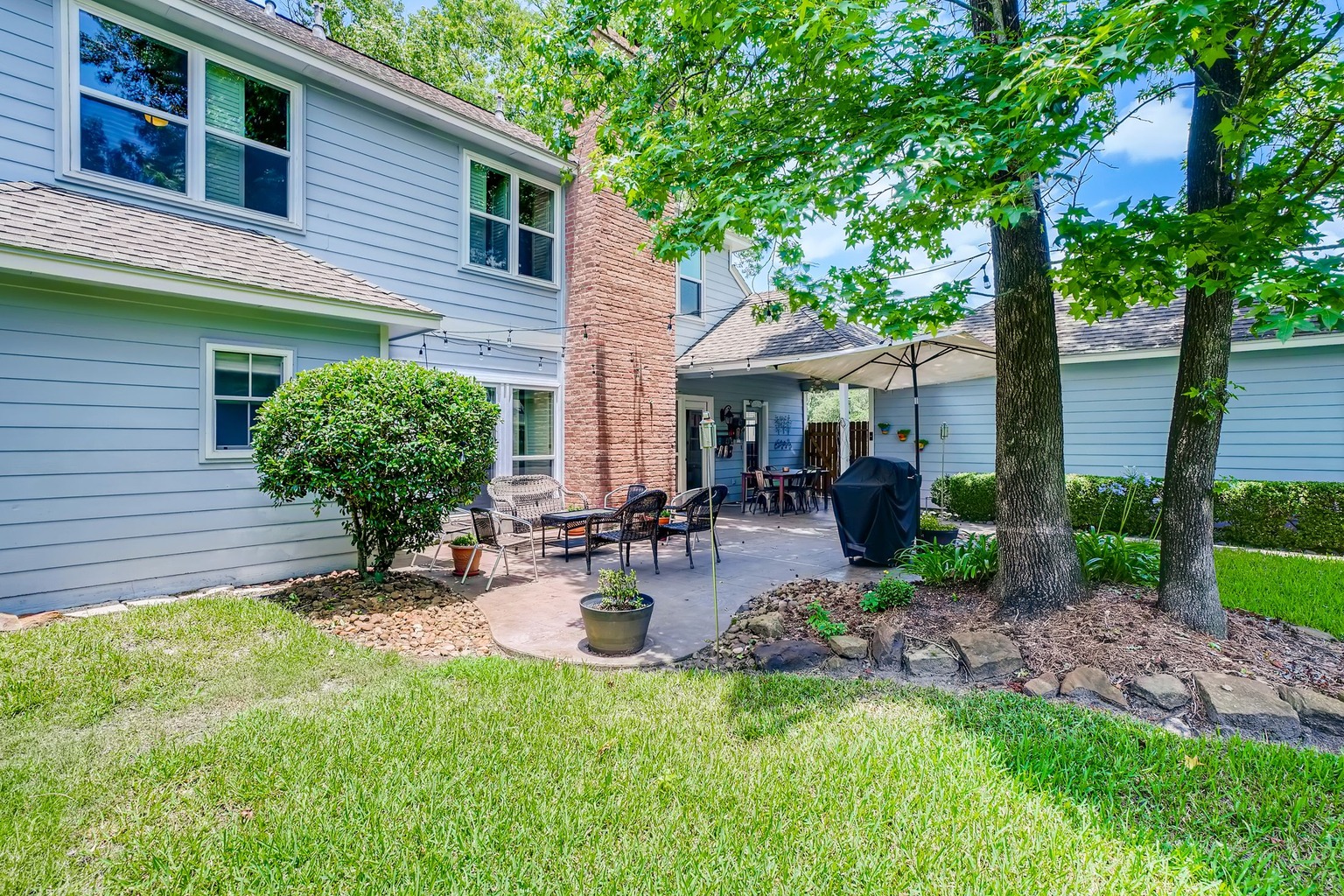
A private yard can be one of the best reasons to choose a townhome in Penticton. It can give a dog room to step outside, create space for a quiet patio, and make an attached home feel more like a detached property. The important question is not only whether the yard looks private. It is what the strata plan, bylaws, approvals and maintenance records say about that space.
In British Columbia, a yard beside a townhome can fall into several legal and practical categories. It may be part of the strata lot, limited common property, ordinary common property used under an exclusive arrangement, or a mix of areas with different responsibilities. Those distinctions affect fencing, irrigation, landscaping, pets, access and who pays when something fails. This guide gives Penticton buyers a practical way to investigate the yard before removing subjects. It is general information, not legal, surveying or insurance advice.
1. Start with the yard boundary, not the listing description
Marketing words such as “private yard,” “fully fenced” or “exclusive outdoor space” describe how an area feels. They do not establish ownership. Under the Strata Property Act, where a strata lot is not separated from other property by a wall, floor or ceiling, its boundary is shown on the strata plan. Bare-land strata boundaries are also shown on the plan by reference to survey markers.[2]
That makes the registered strata plan the first document to compare with what you saw at the showing. Ask where the strata lot ends, whether the patio or yard is labelled limited common property, and whether fences, retaining walls, utility corridors or shared walkways cross the apparent yard. A listing floor plan, aerial image or fence line may be useful for orientation, but it is not a substitute for the registered plan or professional advice about a difficult boundary.
Limited common property, often shortened to LCP, remains common property but is designated for the use of one or more strata lots. The Province says the designation must be shown on the registered strata plan or on a sketch plan attached to a resolution filed at the Land Title Office.[1] That is more durable than a casual statement that an owner has “always used” the space.
What this means for you
Treat the fence as a physical feature, not proof of the legal boundary. Match the yard to the strata plan and any filed sketch plan before deciding what you own, what you may use exclusively and what the strata can access.
2. Distinguish limited common property from short-term exclusive use
A yard that is not LCP may still be used by one owner under an exclusive-use permission. The difference matters. The Province explains that a strata council can grant a short-term exclusive-use arrangement over common property that is not designated as LCP, but the arrangement is not attached to the strata lot and ends automatically when the owner sells or a tenant leaves.[1]
Under section 76 of the Act, that permission may carry conditions, is generally granted for no more than one year, may be renewed, and may be cancelled on reasonable notice.[2] A buyer should therefore ask whether the yard’s exclusive use comes from the plan, a filed resolution, a council permission, a licence agreement or only an informal custom.
Read the exact record. If the owner is relying on a council letter, confirm its date, term, conditions and transfer consequences. If a deck, shed, garden bed or gate sits in that area, ask whether the improvement was separately approved. Do not assume that permission to use land also authorizes permanent alterations to it.
3. Verify every fence, gate, screen and enclosure approval
Fencing creates privacy, but it can also create an approval trail and future cost. Under the Standard Bylaws, an owner must obtain written strata approval before altering a strata lot where the work involves fences, railings or similar structures enclosing a patio, balcony or yard. Written approval is also required before an owner alters common property, including LCP.[3] Individual strata corporations can amend the Standard Bylaws, so the registered bylaws for the specific complex control the practical review.
Ask for the original approval and any attached alteration agreement. Look for approved height, material, colour, location, gate direction, contractor requirements and responsibility for repair or removal. If the visible fence differs from the approved plan, the buyer should understand whether the strata has accepted the change in writing or whether an unresolved issue may transfer with the lot.
Walk the perimeter slowly. Check leaning panels, rotted posts, gaps under gates, damaged latches and evidence that irrigation is soaking wood or footings. Note whether a gate blocks emergency access, a utility route or maintenance access. A fence can look serviceable from the patio while failing along a side lane or behind dense planting.
Paper check
Approval letter, alteration agreement, plans, contractor invoices and any later council correspondence.
Boundary check
Fence location compared with the strata plan, LCP markings, easements and shared access routes.
Condition check
Posts, rails, gates, drainage, soil contact, staining, settlement and neighbouring attachments.
Cost check
Who maintains, repairs, replaces or removes the enclosure, and whether that obligation follows the lot.
4. Do not assume “private” means owner-maintained
Responsibility can be split between the owner and the strata. Section 72 of the Act says the strata corporation must repair and maintain common property and common assets, subject to provisions that allow bylaws to make an owner responsible for certain limited common property.[2] The Standard Bylaws place routine repair and maintenance of LCP on the owner except for work assigned to the strata, while also assigning the strata specified responsibilities for structures, exterior elements and fences enclosing yards.[3]
The local bylaws may allocate duties differently. Read them alongside the budget, minutes, depreciation report and alteration agreements. Separate weekly or seasonal tasks—mowing, pruning, leaf removal, weed control and irrigation monitoring—from capital work such as replacing a retaining wall, repairing perimeter drainage or rebuilding a fence.
Minutes can reveal the practical operating history. Search for recurring discussions about dead landscaping, roots, drainage, fence standards, irrigation leaks, water bills, pest control, snow storage and access disputes. If owners have been maintaining yards inconsistently, ask whether council plans to standardize the work or charge affected owners.
5. Trace the irrigation system and the water bill
A green yard does not tell you who owns the irrigation lines, who controls the timer or who pays for water. Determine whether the yard uses a strata-wide system, a line connected to the unit, a separate meter, hand watering or no permanent irrigation. Ask where the shutoff and controller are located, which contractor services the system, and who pays when a buried line leaks.
Inspect for uneven coverage, overspray against siding, soggy soil, dry patches, damaged heads and water running toward foundations or neighbouring property. If a unit owner installed drip lines or changed planting beds, ask for approval and a diagram. Hidden irrigation changes can become expensive when a fence, patio or mature plant blocks access.
Penticton water rules also affect how a yard can be used. The City’s current page says Stage 2 restrictions are in effect until further notice, with designated irrigation days and time windows, while attended hand watering is permitted at any time under that stage.[5] Restrictions can change, so buyers should check the live City page rather than relying on a seller’s old schedule.
For a low-maintenance purchase, compare the yard’s landscaping with Penticton’s dry summers. Drought-tolerant plants, functional mulch, healthy soil and a controllable drip system may be easier to manage than a high-water lawn. The key is not a particular landscaping style; it is knowing the cost, approval status and maintenance workload before you commit.
6. A fenced yard does not override pet bylaws
A private-looking yard may be useful for a pet, but it does not create permission to keep that pet. The Province says strata pet bylaws can ban pets, limit their number or type, impose size restrictions, require registration and set rules such as leashing in common areas.[4] Certified guide and service dogs have statutory protections, and accommodation duties may also apply in disability-related situations.
Read the current registered bylaws and ask about rules governing the yard itself. Can a dog be left outside unattended? Are pet doors allowed? Must animals be leashed on LCP or while moving through a shared lane? Are there nuisance, waste, barking or landscaping rules? Does the gate latch securely, and are there gaps beneath or beside the fence?
Also test the route from the home to the yard. A yard may be exclusive-use space while the path to it crosses common property where leash rules apply. For a large dog, verify the exact weight or breed language rather than accepting “pet friendly” as enough. For multiple pets, confirm the count and whether existing-pet exemptions would help the seller but not a new buyer.
7. Inspect drainage, grading, trees and retaining walls
Outdoor due diligence should extend beyond the patio surface. Look at where roof water, irrigation and snowmelt travel. Soil sloping toward the building, blocked drains, low spots, staining, algae, efflorescence or repaired foundation cracks deserve closer review by the appropriate inspector or contractor. Ask whether the strata has drainage plans, prior leak reports or engineering recommendations.
Trees create shade and privacy but also raise questions about roots, pruning, leaf cleanup, irrigation and responsibility after storm damage. Confirm whether an owner can remove or heavily prune a tree, especially when it stands on LCP or common property. A mature tree shown as a feature may be protected by strata rules or may be approaching costly maintenance.
Retaining walls are another high-impact item. Identify whether the wall serves one yard, supports common property or affects several lots. Search minutes and the depreciation report for inspection, movement, drainage or replacement planning. Do not infer responsibility only from which side of the fence the wall appears to sit.
8. Build a yard-specific document checklist
- Registered strata plan and amendments: identify strata-lot boundaries, LCP and shared areas.
- Current title and registered interests: check easements, rights of way and covenants that may affect the yard.
- Current bylaws and rules: review alterations, landscaping, fencing, pets, nuisance, water use and owner maintenance.
- Form B and attachments: note alteration agreements, assigned areas and disclosed obligations.
- Council and general-meeting minutes: search for fences, yards, irrigation, drainage, trees, retaining walls, pests and disputes.
- Budget, financial statements and depreciation report: identify planned common-property work that may affect outdoor areas.
- Written approvals: obtain records for fences, gates, patios, sheds, hot tubs, pergolas, garden structures, pet doors and irrigation changes.
- Inspection evidence: document visible condition and bring in qualified advice where drainage, structure, electrical work or boundaries are uncertain.
9. Use the second showing as a working inspection
Return with a tape measure, phone camera and a copy of the plan. Check the width of gates, stair access, patio dimensions, sun exposure and sightlines from neighbouring windows. Listen for road, HVAC and shared-area noise. Test exterior outlets and hose bibs where permitted, and ask who winterizes irrigation. Confirm whether furniture, planters, sheds or storage boxes are included or merely staging.
Think through normal use. Where will a barbecue sit without damaging siding or blocking access? Can bikes, garden tools or seasonal furniture be stored without violating rules? Is there a practical route for soil, patio furniture or maintenance equipment? If accessibility matters, measure thresholds, steps, gate width and surface transitions rather than relying on photographs.
Match the physical yard to the legal plan, written permissions and real maintenance burden.
Gather approvals, alteration agreements, irrigation details and repair records before listing.
Seek written approval before changing fences, landscaping, structures or shared systems.
10. Compare yards by certainty, not just size
The largest yard is not automatically the best yard. A smaller patio with clear LCP designation, written approvals, sensible drainage and a reliable maintenance arrangement may be more valuable to a buyer than a large fenced area supported only by custom and assumptions. Build a simple comparison using five headings: legal status, permitted use, condition, annual workload and long-term cost.
Price the lifestyle honestly. Add likely landscaping, irrigation service, fence repair, pet-proofing and outdoor storage costs. Balance those expenses against the privacy and usability the yard provides. If a material feature cannot be verified before subject removal, make the uncertainty explicit in your decision instead of letting the word “private” carry more weight than the documents.
FAQ: Penticton townhomes with private yards
No. The yard may be part of the strata lot, limited common property or common property used under permission. Check the registered strata plan and supporting resolutions or agreements.
Do not assume so. Review the complex’s current bylaws and obtain written strata approval where required before changing a fence, gate, screen or enclosure.
Responsibility depends on the Act, the strata’s bylaws and any alteration agreement. Routine owner work and major strata work can be divided, so identify each task rather than asking only who “maintains the yard.”
No. Confirm the current pet bylaw, permitted number and type of pets, common-area rules, gate security and any restrictions on leaving animals outdoors.
Check boundaries, approvals, fencing, drainage, irrigation, grading, retaining walls, trees, exterior outlets, hose bibs, storage, access and the maintenance record. Escalate structural, legal or boundary concerns to the appropriate professional.
Sources
Want to keep going?
Get the South Okanagan Townhome Buyer’s Guide (Free)
Instant download link is emailed to you. Clear checklists, strata fee basics, and the questions buyers forget to ask.
No spam. Unsubscribe anytime.