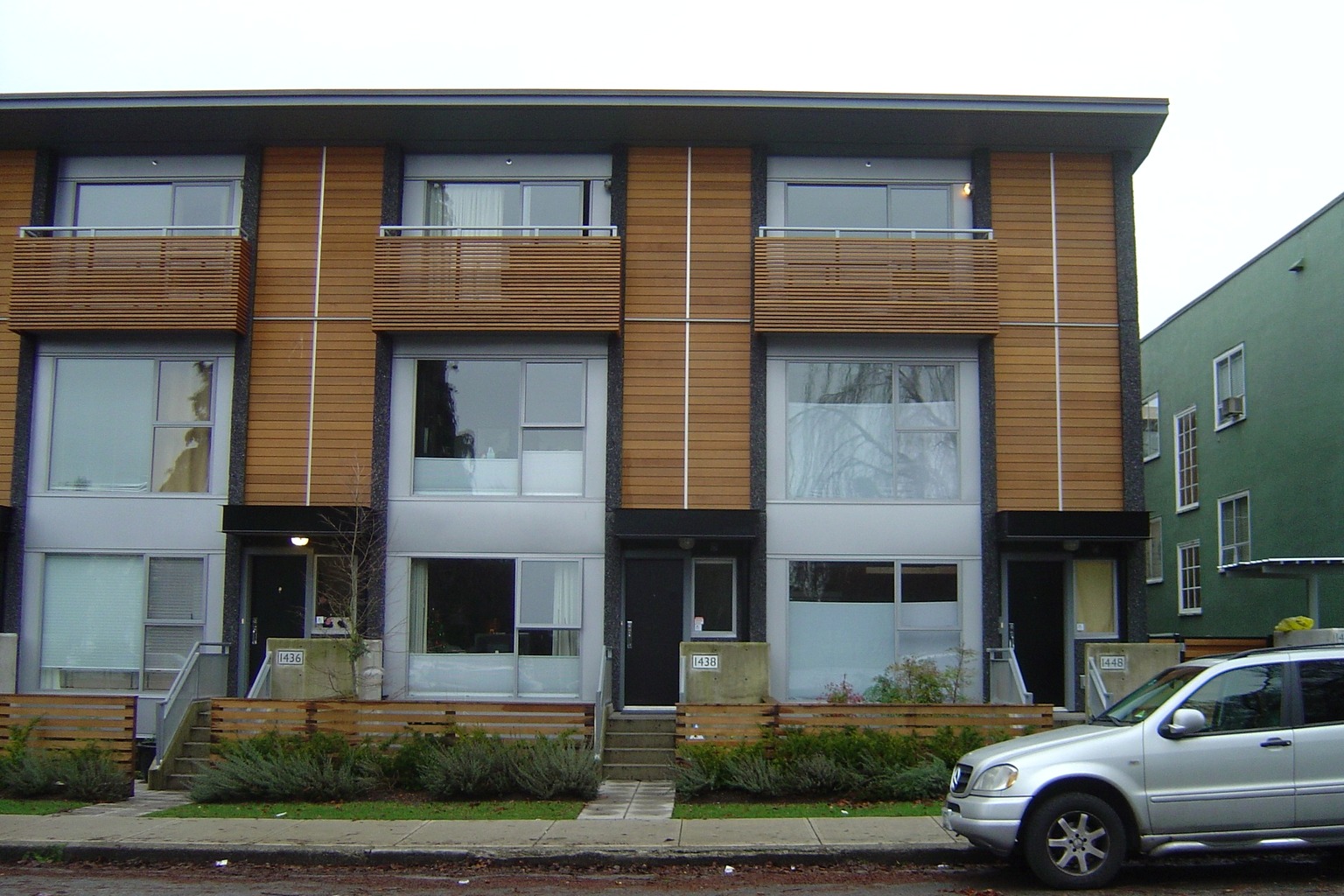
A new-build Penticton townhome can offer unused finishes, current systems and statutory warranty coverage. A resale can offer a finished neighbourhood, an operating history and documents that show how the strata actually behaves. Neither is automatically the safer or cheaper choice. The better purchase is the one whose full cost, timing, documents and risk profile fit the buyer.
The short answer: compare certainty, not just age
New construction often feels simpler because everything is fresh. Yet a buyer may be committing before the home, landscaping, common property or final strata operations are complete. A resale home may show wear, but the buyer can usually inspect the exact unit and review years of minutes, budgets, insurance and maintenance decisions. The core trade-off is therefore not simply “new versus old.” It is future promises versus an observable operating record.
More newness, less history
Fresh materials, modern layouts and home warranty coverage can be valuable. Buyers must scrutinize the disclosure statement, contract, completion assumptions, included finishes, GST treatment, warranty start dates and what the new strata has not yet learned.
More history, more visible wear
An established strata can provide real budgets, minutes, claims, repair patterns and a depreciation report. Buyers must still assess remaining component life, renovations, deferred maintenance and whether the asking price reflects upcoming work.
Start with the all-in price, not the sticker price
The advertised price is only one line in the comparison. For a new build, confirm whether GST is included, who receives any available rebate, what upgrade deposits are due, whether appliances, blinds, air conditioning, landscaping, parking, storage and EV equipment are included, and what closing adjustments can be charged. Do not assume a display-suite finish is part of the base specification.
The Canada Revenue Agency says an individual may qualify for the existing GST/HST new housing rebate in several situations, including buying new or substantially renovated housing from a builder for use as the buyer’s or a relation’s primary place of residence. Eligibility and calculation depend on the transaction and facts, so the contract should state how GST and any rebate are being handled.[4]
First-time buyer and new-build incentives: three programs to keep separate
These programs have different taxes, thresholds and eligibility rules. A buyer may qualify for more than one, but should not treat the $1.1 million provincial threshold as a general GST exemption.
| Program | Who and what it may cover | Current value thresholds |
|---|---|---|
| Federal first-time home buyers’ GST/HST rebate | An eligible first-time buyer purchasing, building or substantially renovating a qualifying new principal residence. It does not apply to an ordinary resale. | Up to 100% of the federal GST paid, to a maximum rebate of $50,000, on a home valued at $1 million or less. The rebate is gradually reduced between $1 million and $1.5 million and is unavailable at $1.5 million or more.[7] |
| BC first time home buyers’ PTT program | An eligible first-time buyer purchasing a qualifying principal residence, whether new or resale. | For a qualifying home with fair market value of $835,000 or less, the exemption applies to property transfer tax on the first $500,000. Partial relief may apply above $835,000 and below $860,000.[8] |
| BC newly built home PTT exemption | A qualifying purchaser of a newly built principal residence. This program is not restricted to first-time buyers. | Full property transfer tax exemption at fair market value up to $1.1 million, with a partial exemption above $1.1 million and below $1.15 million.[3] |
Important: CRA currently lists the federal first-time buyer rebate as open for applications. The agreement, construction, occupancy, ownership and first-time-buyer tests still matter. Ask the lawyer or notary and tax professional to confirm eligibility and show how GST, rebates and property transfer tax will appear in the contract and statement of adjustments before relying on an estimated saving.
For a resale, budget for the normal closing items plus inspection, immediate repairs, insurance, moving and any modernization you consider essential. A lower resale price can disappear quickly if the roof, windows, heat pump, flooring and appliances all need near-term attention. Conversely, a well-maintained resale with completed capital work can provide more financial certainty than a new strata with low initial fees and no operating track record.
| Cost question | New build | Resale |
|---|---|---|
| Purchase taxes | Confirm GST, rebate treatment and PTT exemption eligibility | Confirm PTT and any other applicable exemptions |
| Immediate work | Upgrades, window coverings, landscaping or deficiencies not covered | Repairs, paint, flooring, appliances or owner-planned renovations |
| Strata fees | May be based on an initial budget that has not met real expenses | Can be compared with actual budgets, increases and spending |
| Future capital | Limited history; verify warranties and remaining developer obligations | Use depreciation report, minutes and completed-project history |
Pre-sale contracts and completion risk
If the new townhome is purchased before completion, the buyer is not only choosing real estate. The buyer is accepting a contract that may address estimated completion windows, extensions, unit changes, material substitutions, assignment restrictions, deposit handling, measured area, common amenities, developer remedies and the consequences of a financing shortfall at completion.
Under British Columbia’s Real Estate Development Marketing Act, a disclosure statement discloses material facts about a development property. The Act also provides a purchaser with a right to rescind a purchase agreement by written notice within seven days after the later of entering the agreement and receiving the required disclosure statement.[1] That short statutory period is a reason to arrange legal and financing review promptly, not a reason to treat the contract as routine.
Financing deserves special attention. A lender’s approval today may not be a guaranteed commitment for completion many months later. Rates, qualification rules, buyer income, debt, appraisal value and the completed property can all affect the final advance. Ask the lender what must be refreshed, whether the deposit is protected in the way the contract describes, and what happens if the appraised value is below the contract price.
Buyer checkpoint: Before the rescission window closes, have a lawyer review the purchase agreement and disclosure statement, have the lender review the actual contract and completion range, and create a written list of every finish, appliance, parking right and upgrade you believe is included.
What 2-5-10 warranty does and does not mean
BC Housing says all new homes built by a Licensed Residential Builder must have home warranty insurance against certain construction defects. The minimum framework is commonly called 2-5-10: specified materials and labour coverage, five-year building-envelope coverage and ten-year structural-defect coverage.[2]
The details matter. BC Housing lists different periods within the materials-and-labour portion, including 12 months for non-common property in strata units, 15 months for common property in multi-unit strata buildings, and 24 months for major systems, exterior cladding, windows, doors and defects that make the home unfit to live in. It also says coverage stays with the home rather than the owner, so remaining coverage can transfer on resale.[2]
Warranty is not a promise that every imperfection will be corrected. BC Housing distinguishes construction defects from cosmetic issues, personal preferences and contractual expectations, and it lists permitted exclusions that can include landscaping, roads, curbs, lanes, site grading and surface drainage.[2] Read the actual policy, identify the provider, record start dates for the unit and common property, and learn the notice procedure before deadlines pass.
A careful deficiency walk-through is still essential. Test doors, windows, plumbing fixtures, drains, outlets, heating and cooling, appliances, cabinets, flooring transitions, exterior penetrations and visible grading. Photograph and date concerns, submit them through the required process, and keep copies. Consider an independent inspection before possession and another review before important warranty periods expire.
Strata documents: new build and resale require different questions
A resale package can reveal how the corporation has operated. The Province identifies Form B, minutes, bylaws and rules, financial statements, repair and maintenance information, strata plans and Land Title Office records among the information buyers should review.[5] Read enough history to identify repeated leaks, insurance claims, noise disputes, parking problems, rental or pet enforcement, deferred projects and changes in council direction.
Depreciation reporting makes that history more useful. The Province says strata corporations with five or more lots must obtain depreciation reports on a five-year cycle from a qualified provider. The report supports planning for repair, maintenance and renewal of common property and assets over a 30-year period.[6] Compare the report’s forecast with the contingency reserve fund, current contributions, completed work and the latest minutes. A report does not fund the work by itself.
A brand-new strata may have draft bylaws, an interim operating budget, proposed unit entitlements and a disclosure package, but no multi-year record. Ask what assumptions support the first budget, which shared contracts are already signed, when owners take control, how deficiencies in common property will be documented, whether amenities are complete, and which developer-controlled decisions can affect future costs.
Do not assume the first-year strata fee is a permanent cost. Snow removal, irrigation, waste, landscaping, utilities, insurance, management and repairs can settle at different levels once the community is occupied. Build a cushion into the ownership budget and compare the fee against the actual services and assets the strata must maintain.
Inspection priorities are different, not optional
With resale, the inspector can evaluate visible age and performance. In a Penticton townhome, that may include roof and exterior condition where accessible, windows and doors, heating and cooling, plumbing, electrical, attic or crawlspace, grading, drainage, decks, patios, retaining walls and signs of previous moisture. The inspection should be read alongside strata responsibility documents so the buyer knows whether a concern belongs to the owner, the strata corporation or both.
With new construction, an inspection is not merely a cosmetic checklist. It can document incomplete work, installation defects, damaged finishes, non-functioning systems and items that should be addressed before possession or within warranty notice periods. For phased developments, inspect the route to the unit, parking, drainage, common entries and construction impacts as well as the interior.
For either type, obtain an insurance response before removing protective subjects. The new unit may not yet have a mature claims record, while the resale strata may have deductibles or loss history that affect owner coverage. Give the insurer the address, construction details, intended occupancy, strata insurance summary and any known risk features rather than asking for a generic townhome estimate.
Penticton trade-offs buyers often underestimate
Location and outdoor function can matter as much as finish age. A resale closer to downtown, beaches, transit or established services may reduce daily driving. A newer development may provide a more efficient layout, garage, EV readiness or modern mechanical systems but sit farther from the routines that matter to the buyer. Test the actual route at the times you expect to use it.
South Okanagan heat makes shading, cooling capacity, window orientation and irrigation practical ownership issues. Ask whether the patio and main rooms face intense afternoon sun, what cooling system is installed, who maintains landscaping, and whether exterior alterations such as awnings, heat pumps or shade structures require approval. In winter, verify snow clearing for private lanes, driveways, visitor stalls and walkways.
New landscaping may take years to provide privacy and shade. Established landscaping can be an asset but may bring irrigation repairs, root issues, mature-tree maintenance or water-use questions. Neither condition is automatically better. Price the work and decide whether you prefer to wait for a setting to mature or manage an existing one.
A practical decision process
- Set an all-in ceiling. Include taxes, closing costs, upgrades, immediate repairs, moving, insurance and a monthly reserve.
- Compare the exact homes. Do not compare a finished resale with an idealized rendering. Use the contract specifications, plans, orientation, parking rights and completion range for the new unit.
- Map the evidence. For resale, rely on the physical inspection and operating documents. For new build, rely on the contract, disclosure statement, warranty policy, specifications and developer commitments that are actually written.
- Stress-test timing. Model completion delays, financing refresh, interim housing and moving flexibility for a pre-sale. Model immediate repairs and renovation timing for resale.
- Use independent advisers. Ask a lawyer or notary, lender, inspector, insurer and tax professional the questions within their scope before removing subjects or letting a rescission deadline pass.
FAQ: new-build and resale Penticton townhomes
No. Compare the all-in contract price, GST treatment, upgrades, property transfer tax eligibility, closing adjustments, immediate work and likely strata costs. A lower advertised price can still produce a higher total.
Potentially. CRA’s first-time home buyers’ GST/HST rebate can return up to 100% of the federal GST paid, to a maximum of $50,000, on an eligible new home valued at $1 million or less. It phases down between $1 million and $1.5 million. The buyer, home, agreement, construction and occupancy requirements must all be confirmed.
No. Coverage applies to defined construction defects for set periods and has limits and exclusions. Cosmetic issues, contractual expectations and some site items may not be covered. Read the actual policy.
Yes. A professional inspection and detailed deficiency record can identify incomplete or defective work and help the buyer use possession and warranty processes properly.
Evidence. Buyers can inspect the exact home and review how the strata has budgeted, maintained, insured and governed the property over time.
The buyer commits before every physical and financial detail is known. Contract terms, timing, financing, substitutions and completion conditions therefore deserve independent review.
Authoritative sources
- [1] BC Laws: Real Estate Development Marketing Act
- [2] BC Housing: Home warranty insurance on new homes
- [3] Province of British Columbia: Newly built home exemption
- [4] Canada Revenue Agency: GST/HST new housing rebate
- [5] Province of British Columbia: Paperwork for strata buyers and sellers
- [6] Province of British Columbia: Strata depreciation reports
- [7] Canada Revenue Agency: First-time home buyers’ GST/HST rebate
- [8] Province of British Columbia: First time home buyers’ program
Want to keep going?
Get the South Okanagan Townhome Buyer’s Guide (Free)
Clear checklists, strata fee basics, and the questions buyers forget to ask.
No spam. Unsubscribe anytime.